Technique Stitch
Kitchener Stitch (Grafting)
Last updated August 13, 2026
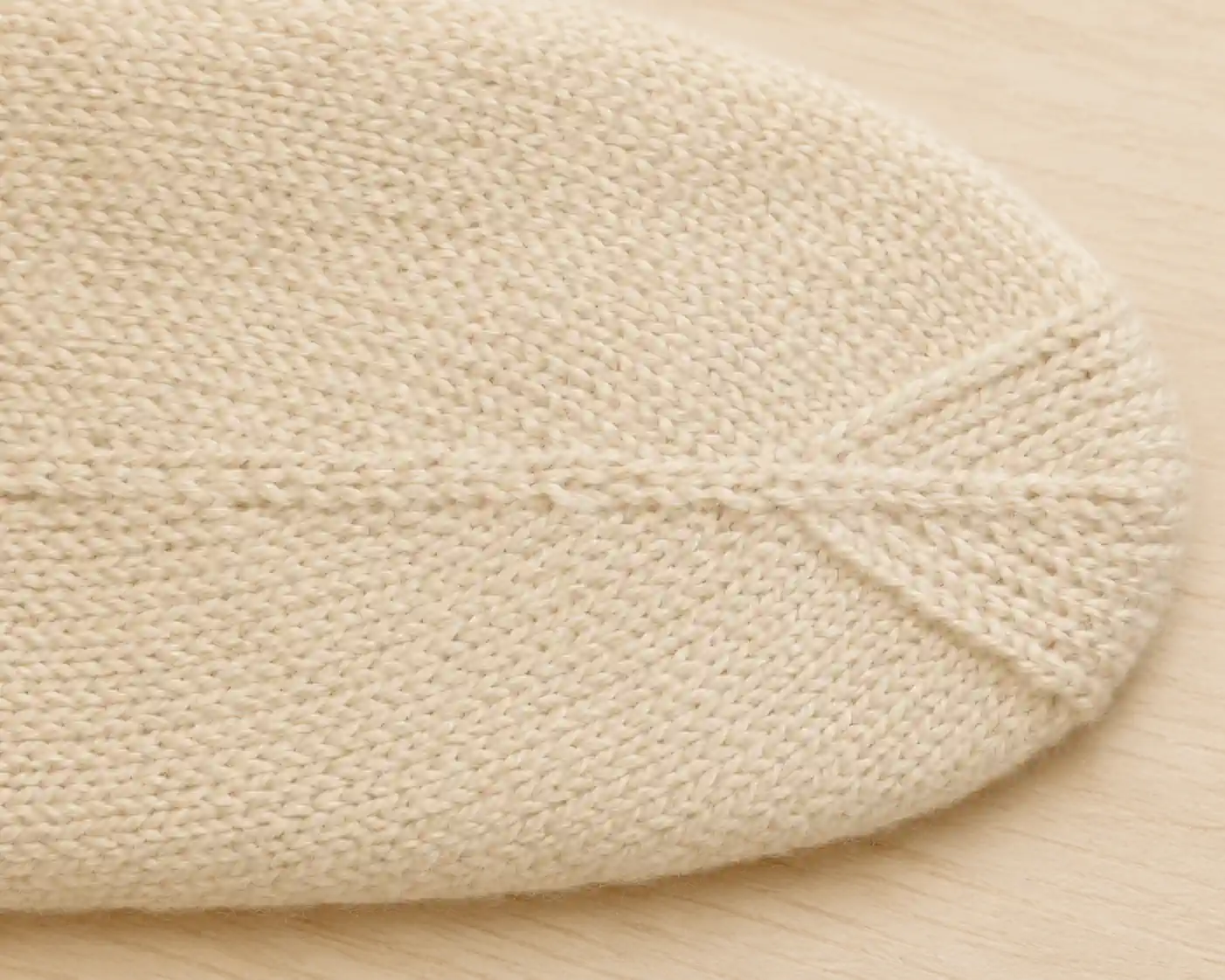
Used For
- Sock toes
- Shoulder seams
- Scarf ends
- Any seamless join between live stitches
A sewn technique that joins two rows of live stitches invisibly, mimicking a row of knitting - most famous for closing sock toes seamlessly.
Instructions
- Divide your live stitches evenly onto two needles, held parallel with the wrong sides together so the two right sides face outward.
- Thread a blunt tapestry needle with a long tail of matching yarn, about four times the width of the seam.
- Set up: pass the tapestry needle through the first front stitch as if to purl and leave it on the needle, then through the first back stitch as if to knit and leave it on the needle - no stitches are removed yet.
- Front needle: insert the tapestry needle knitwise into the first stitch and slip it off, then purlwise into the next stitch and leave it on the needle.
- Back needle: insert the tapestry needle purlwise into the first stitch and slip it off, then knitwise into the next stitch and leave it on the needle.
- Repeat the front and back needle steps, alternating between them, until one stitch remains on each needle.
- Finish by working the last front stitch knitwise off and the last back stitch purlwise off, then weave in the tail.
Tips & Notes
- Keep tension even by gently tugging the yarn snug every few stitches rather than pulling tight after each one.
- The mnemonic "knit off, purl on" (front needle) and "purl off, knit on" (back needle) helps you remember which way to insert the needle.
- Kitchener stitch works because each pass recreates the V-shaped path yarn would take if you'd knit straight through - the seam becomes a genuine extra row of knitting.