Seam Stitch
Backstitch
Last updated August 3, 2026
Used For
- Strong seams
- Hand-sewn hems
- Repairs that need to hold
- Mending
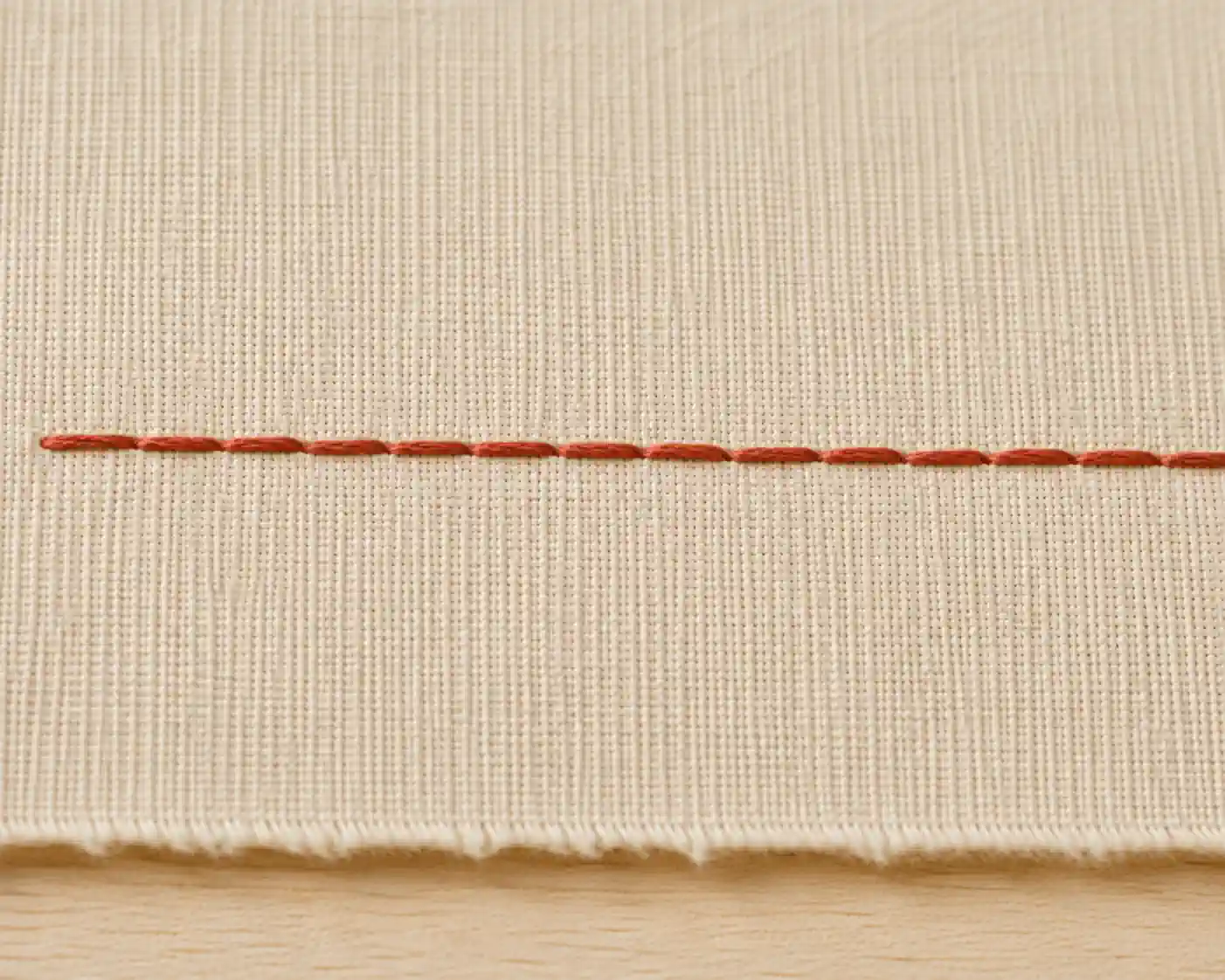
A strong, sturdy hand stitch that doubles back on itself with every stitch, mimicking the strength of a machine seam.
Instructions
- Bring the needle up through the fabric at your starting point.
- Insert the needle back down a short distance behind where the thread first came up, then bring it back up the same distance ahead of your starting point.
- Insert the needle down again at the point where the previous stitch ended, closing the gap with no space between stitches, then bring it back up the same distance further ahead.
- Continue: each stitch goes backward into the end of the last stitch, then forward past the needle's exit point, creating a solid, unbroken line on the front.
- Secure the thread with a small knot when finished.
Tips & Notes
- On the front, backstitch looks like a continuous, unbroken line, almost like machine stitching; the doubled-back structure is only visible on the back.
- Because each stitch overlaps the last, backstitch is significantly stronger than running stitch and is the go-to choice for seams that need to bear weight or stress.
- Keep your stitch length consistent for the neatest line - uneven backstitches are one of the most common beginner tells.