Finishing Stitch
Herringbone Stitch (Sewing)
Last updated August 3, 2026
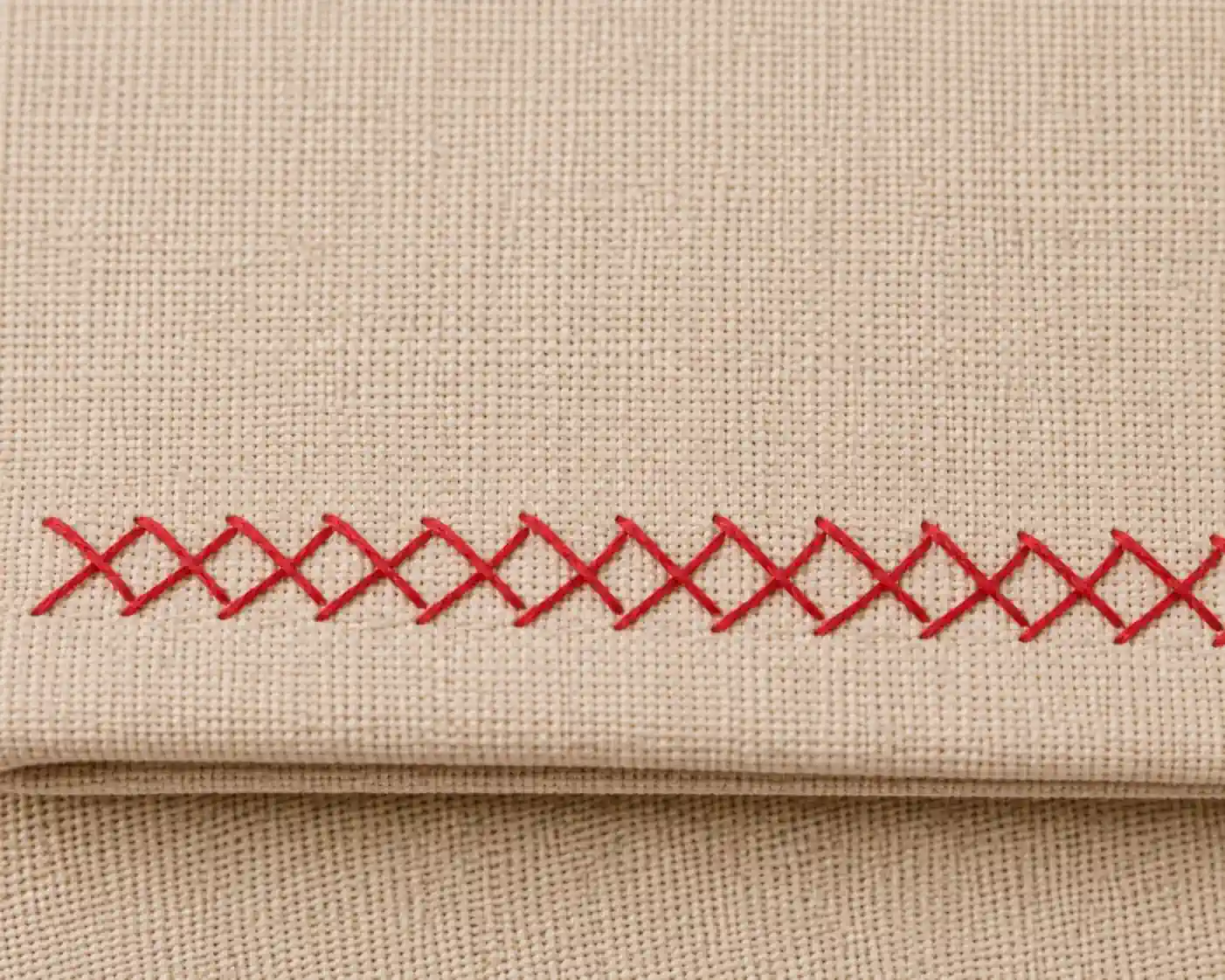
Used For
- Hem finishing
- Decorative seam finishing
- Securing facings
- Fabrics that need a flexible hem
A crossed, X-patterned stitch worked over a hem or seam allowance, giving a decorative finish with some built-in stretch.
Instructions
- Fold the hem up to where you want it and work from left to right, with the needle pointing back toward the left, similar to catch stitch.
- Bring the needle up through the hem allowance just below the fold.
- Take a small stitch in the main fabric a short distance up and to the right, catching only a thread or two.
- Take a small stitch in the hem allowance a short distance further up and to the right of that.
- Continue alternating between main fabric and hem allowance, always moving up and to the right, so the stitches cross into a series of X shapes along the hem.
Tips & Notes
- Herringbone stitch is essentially a wider, more decorative cousin of catch stitch - the mechanics are the same, just with larger, more visible crosses.
- The crossed structure gives this stitch noticeable stretch, which is why it's often chosen for hems on knits or bias-cut fabric that need to move.
- Because the stitches are meant to be more visible than an ordinary hem stitch, herringbone is sometimes worked in a contrasting or decorative thread on the outside of a garment.