Edging Stitch
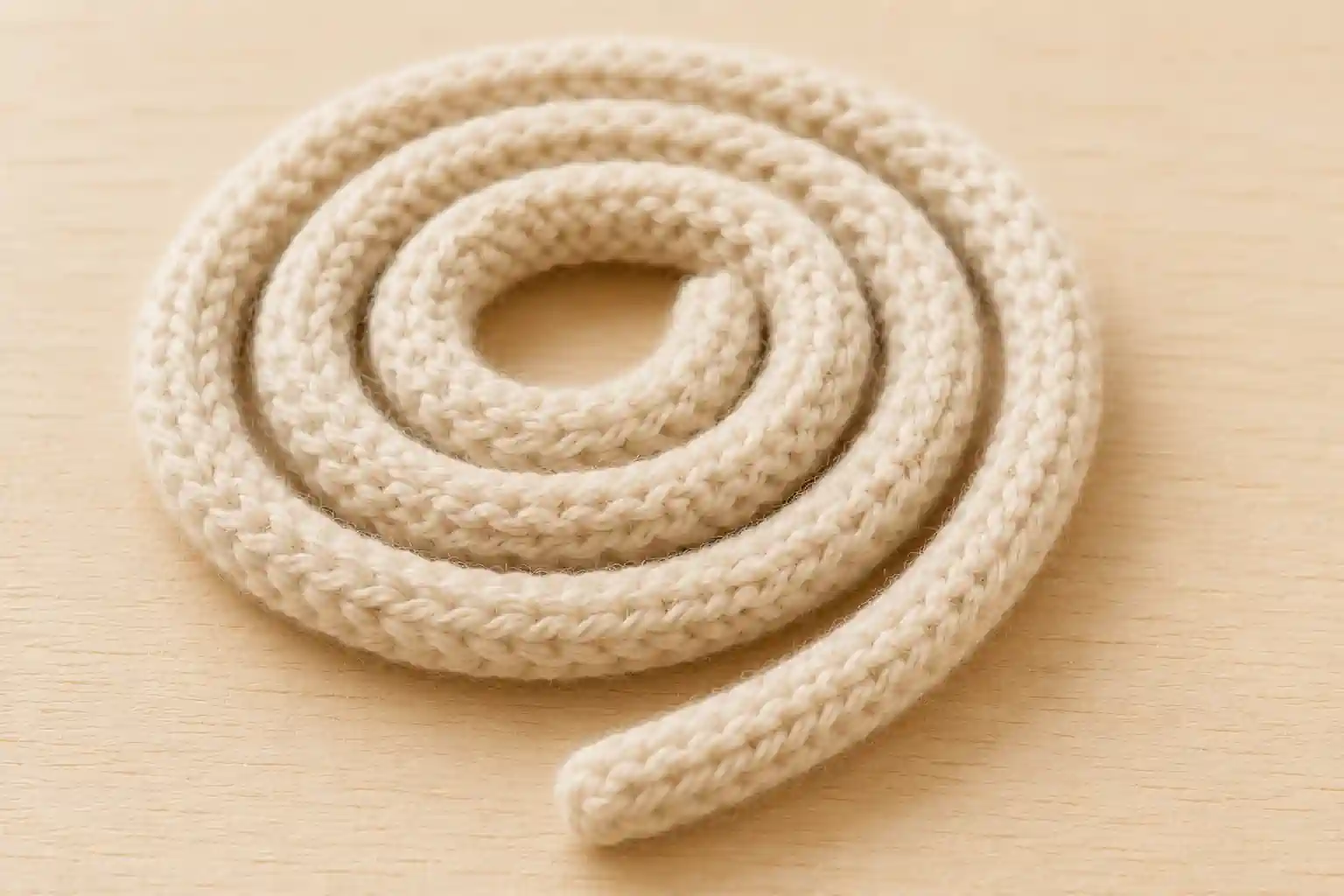
I-Cord
Last updated August 3, 2026
Used For
- Drawstrings and ties
- Button loops
- Bag straps
- Edging trims
A narrow knitted tube worked on two double-pointed needles, used for ties, edgings, and straps.
Instructions
- Using double-pointed needles, cast on 3-5 stitches - 3 for a very narrow cord, up to 5 for a thicker one.
- Knit across the stitches as normal, but do not turn your work.
- Slide the stitches back to the other end of the same needle, so the working yarn is now at the wrong end.
- Pull the working yarn tightly across the back of the stitches and knit across again.
- Repeat the sliding and knitting - always from the same side - until the cord reaches the desired length.
- To finish, either bind off normally or, for i-cord edging worked along a piece, work the last stitch of every row together with a picked-up stitch from the edge you're trimming.
Tips & Notes
- The tube forms because you never turn the work - pulling the yarn snugly across the back each time is what pulls the edges around into a round cord.
- The first few rows look messy and loose; the tube shape only becomes obvious after 4-5 rounds, so don't judge it too early.
- I-cord bind-off, working 2 stitches together with the last i-cord stitch at the end of every row, gives a neat, cord-like finished edge to any knitted piece, not just standalone cords.