Fastening Off and Weaving In Ends
Last updated November 12, 2026
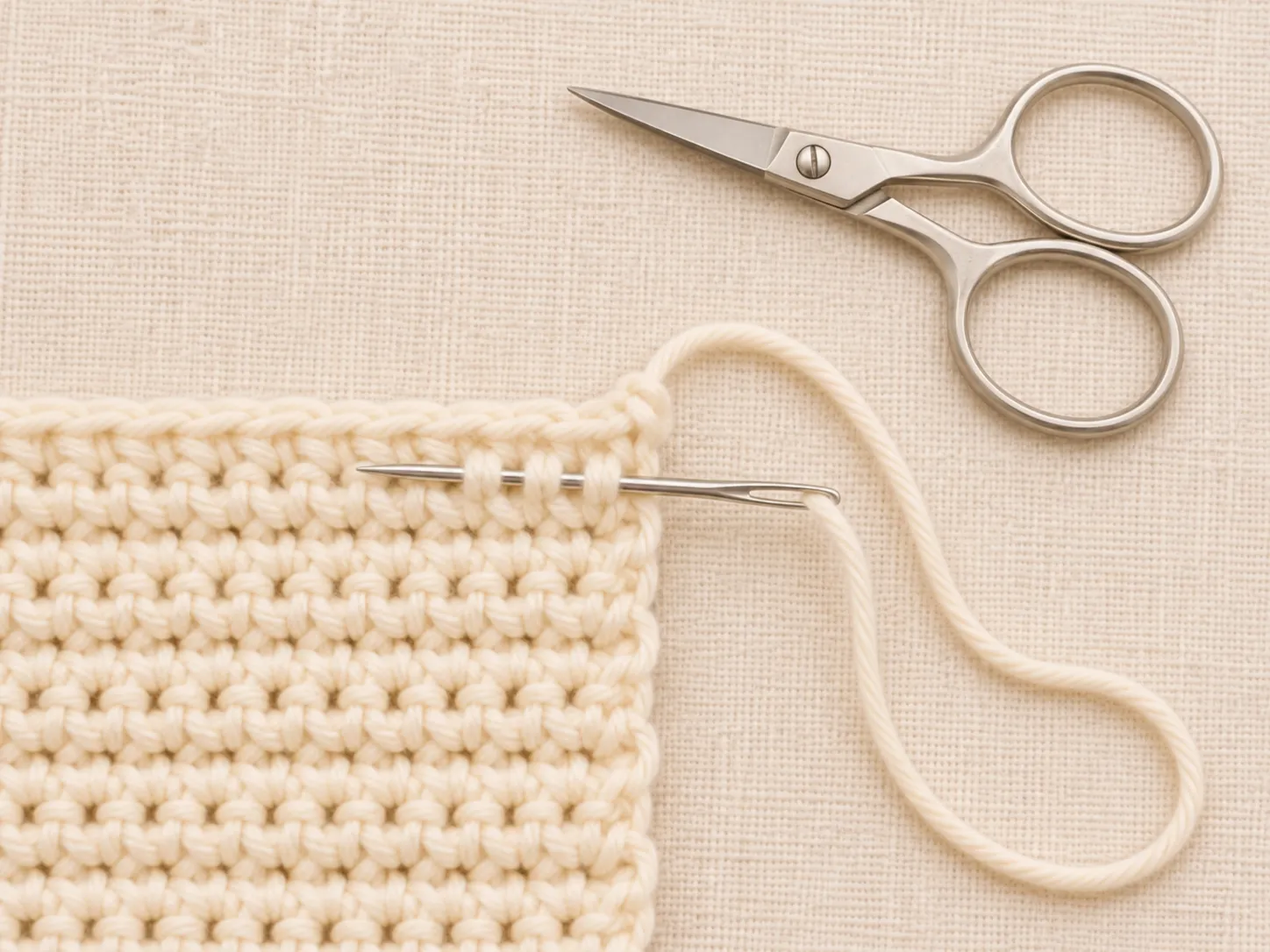
At a Glance
- Difficulty
- Beginner
- Repeat
- Leave tails of at least 6 in (15 cm); weave each for about 2-3 in (5-7.5 cm), changing direction at least once
Practice with: A blunt tapestry needle with an eye large enough for your yarn, sharp scissors and stitch markers. A small crochet hook can pull tails through tight stitches.
Used For
- Finishing any crochet project
- Neat joins on coasters, granny squares and motifs
- Closing up amigurumi pieces
- Securing ends from color changes
How to finish a piece of crochet: secure the last loop, close rounds with an invisible join, and weave in the yarn tails so they stay hidden.
This page uses US crochet terms - see the US vs UK crochet terms chart to convert.
Crochet only ever has one live loop, so fastening off is much quicker than binding off in knitting: you just pull the yarn through that last loop. The work that matters is in hiding the tails so they are secure and invisible.
Crochet fabric is more open than knitting and stitches are taller, so the tails need to go through the stitches themselves - through the posts or along the backs of the rows - rather than simply across the surface. Changing direction locks them in. Slippery yarns such as cotton, silk or bamboo benefit from an extra change of direction.
The invisible join is worth learning for anything worked in joined rounds. It replaces the slip stitch join with a sewn loop that looks just like the top of a stitch, so the end of the round doesn't show.
Instructions
- Finish your last stitch. Cut the yarn, leaving a tail of about 6 in (15 cm), or longer if you will use it to sew.
- Yarn over with the tail and pull it all the way through the loop on the hook. Pull the tail firmly to tighten the loop into a small knot. This is fastening off.
- For a neat finish on joined rounds, use an invisible join instead of a slip stitch. Skip the final slip stitch, fasten off, and thread the tail on a tapestry needle.
- Take the tail from front to back under both loops of the first stitch of the round. This works best on rounds that start with a stitch rather than a turning chain.
- Bring the tail back down into the top of the last stitch, where the yarn came out, and adjust the new loop so it is the size of a stitch top.
- To weave in, run the tail through the backs of stitches on the wrong side for about 2 in (5 cm), then change direction and run it back through different stitches.
- On amigurumi, push the needle into the stuffed piece and out the other side, pull the tail slightly and cut it close; the end will retract inside.
Tips & Notes
- Weave ends in as you go on big projects, so finishing doesn't pile up.
- For stripes, weave each tail into an area of the same color.
- Weave in before blocking or washing, but trim the tails afterward, once they have settled with the fabric.
Common Mistakes
Tails work loose and poke out.
They were too short or woven in only one direction. Weave at least 2 in (5 cm) and change direction once or twice.
The woven-in tail shows on the right side.
Stay in the wrong-side half of the stitches or inside the posts, and don't pull tight.
The invisible join leaves a loop that is too large or too small.
Adjust the tension of the sewn loop before weaving in, matching it to the stitch tops beside it.
Variations
- Crocheting over ends - Lay the tail along the top of the row you are working into and crochet over it for 8-10 stitches. It traps the tail as you go, leaving less to weave in later.
- Long-tail finish - Leave a tail long enough to sew pieces together, then use it to attach limbs or seam motifs before weaving in the rest.
In Patterns
Patterns say "fasten off" (sometimes FO) at the end of a piece and "weave in ends" in the finishing. Amigurumi patterns often say "fasten off, leaving a long tail for sewing".
Questions
How long should the tail be?
At least 6 in (15 cm) for weaving in. For sewing, leave about three times the length of the seam.
Is fasten off the same as finish off?
Yes - patterns use both phrases for the same step.
Do I need a tapestry needle?
It is the easiest tool, but a small crochet hook can also pull tails through stitches.