Reverse Single Crochet (Crab Stitch) (rev sc)
Last updated November 12, 2026
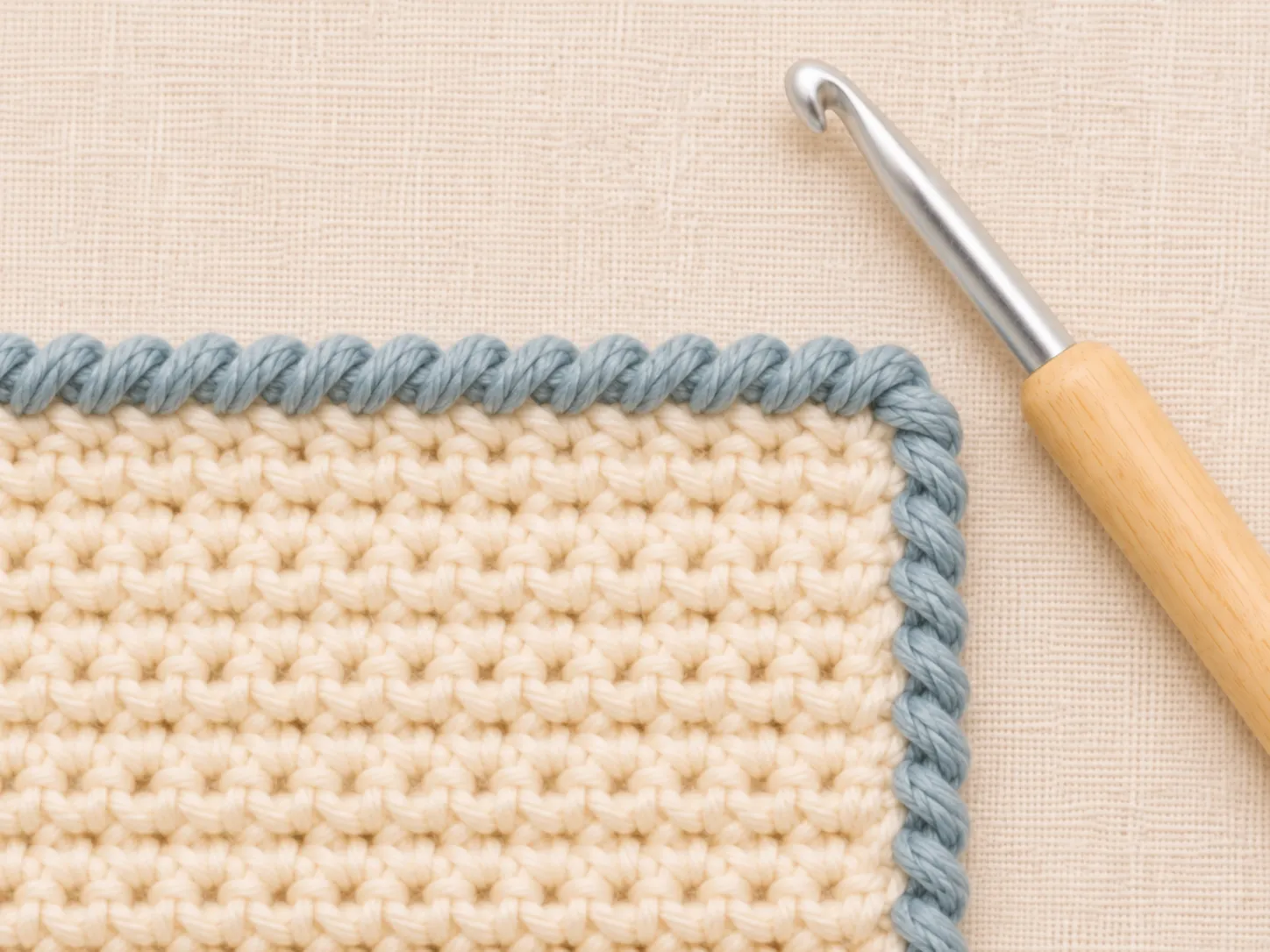
At a Glance
- Difficulty
- Intermediate
- Abbreviation
- rev sc
- UK name
- Crab stitch / reverse double crochet
- Repeat
- Any number of stitches; worked as one right-side row or round from left to right (right to left for left-handers), one stitch into each stitch of the base
Practice with: A smooth worsted (aran) yarn and a 5 mm (US H-8) hook. A hook with a smooth, rounded throat helps when pulling up the loop at the unusual angle.
Used For
- Edging blankets and throws
- Finishing dishcloths and coasters
- Bag and basket rims
- A corded border on garments that don't need to stretch
Single crochet worked backward, from left to right, to make a firm, twisted, rope-like edging - a classic finish for blankets, cloths and bags.
In UK terms this stitch is called Crab stitch / reverse double crochet. This page uses US crochet terms - see the US vs UK crochet terms chart to convert.
Reverse single crochet is an ordinary single crochet worked in the opposite direction. Because each stitch goes into the stitch behind it, the loops twist around each other and the stitches sit at an angle, forming a corded, beaded edge. Its nickname, crab stitch, comes from that sideways, backward movement.
The edge is firm and doesn't stretch much, so it suits blankets, dishcloths and bag rims. It is less suitable for edges that need to stretch, like sweater necks or cuffs.
It feels awkward at first because your hook goes into each stitch at an unusual angle. After a few stitches the motion becomes much easier, and practicing on a swatch with a row of single crochet is the quickest way to learn it.
Instructions
- Work at least one row or round of single crochet as the base. Finish with the right side facing you and do not turn.
- Chain 1.
- Insert the hook from front to back into the first stitch to the right of the hook (if you are left-handed, work to the left).
- Yarn over and pull the loop through to the front - 2 loops on the hook. The loops will cross over each other, which is what forms the twist.
- Yarn over and draw through both loops. One reverse single crochet is made.
- Continue working to the right, into each stitch in turn.
- At the end of a round, slip stitch into the first stitch and fasten off; at the end of a row, fasten off and weave the tail into the edge.
Tips & Notes
- Work a test strip before edging a whole blanket, to check that the edge lies flat.
- At corners, one extra stitch usually keeps the edge from pulling - test on your piece.
- A contrasting color makes the corded effect more striking.
Common Mistakes
The edge ruffles.
There are too many stitches or the tension is too loose. Use a smaller hook or skip an occasional stitch.
The edge pulls in and puckers.
The tension is too tight. Use a hook one size larger and keep the loops relaxed.
The stitches look like ordinary single crochet.
You have started working in the usual direction. Every stitch must go into the next stitch to the right (for right-handers).
The loop slips off the hook as you pull it through.
Turn the hook so the throat faces down as you pull up the loop, then turn it back up for the final yarn over.
Variations
- Spaced crab stitch - Work chain 1 and skip one stitch between each reverse sc, for a lighter, more open corded edge.
- Reverse half double crochet - Half double crochet worked backward in the same way gives a slightly taller, chunkier cord.
In Patterns
Written as rev sc, reverse sc or crab st. A typical last round reads "Ch 1, do not turn, rev sc in each st around; join with sl st to first rev sc. Fasten off." UK patterns call it crab stitch or reverse double crochet.
Questions
Why is it called crab stitch?
Because you work backward, like a crab walking sideways. The name is used in both US and UK patterns.
Is reverse single crochet stretchy?
Not very. It is better for firm edges than for necklines or cuffs that need to stretch.
Can I work it over double crochet?
Yes, but it is easiest over a row of single crochet. Many patterns add one round of sc first to give an even base.