Single Crochet Two Together (sc2tog)
Last updated November 12, 2026
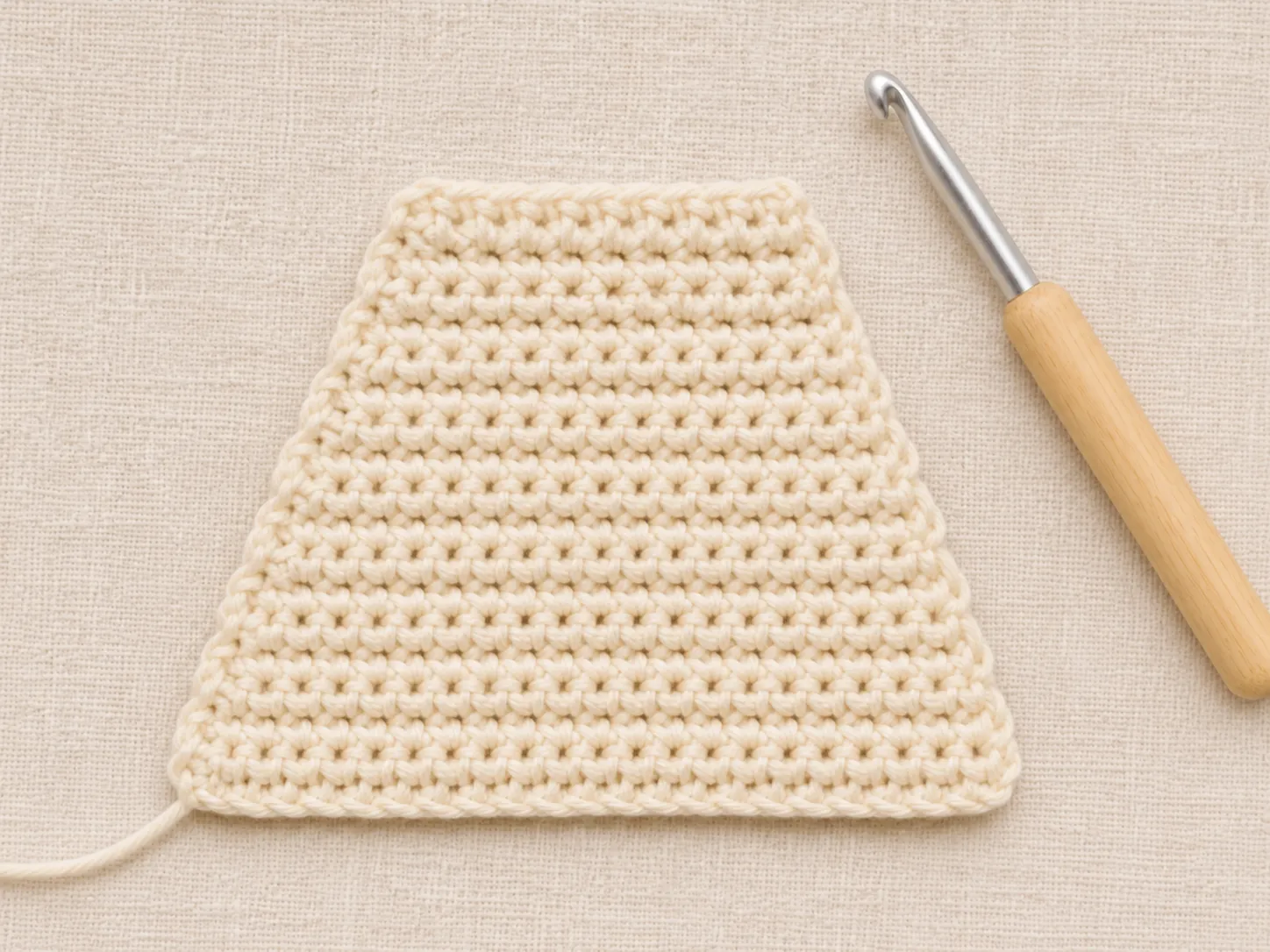
At a Glance
- Difficulty
- Beginner
- Abbreviation
- sc2tog
- UK name
- Double crochet two together (dc2tog)
- Repeat
- Worked over any 2 stitches; decreases 1 stitch
Practice with: A smooth worsted (aran) yarn and a 5 mm (US H-8) hook make it easy to see the two loops being joined.
Used For
- Shaping amigurumi
- Tapering edges of triangles, hats and garments
- Necklines and armholes in single crochet
- Closing the end of a round piece
The basic single crochet decrease: pull up a loop in each of two stitches, then finish them together so two stitches become one at the top.
In UK terms this stitch is called Double crochet two together (dc2tog). This page uses US crochet terms - see the US vs UK crochet terms chart to convert.
Sc2tog is the standard decrease in single crochet. You start a single crochet in each of two stitches but leave the last step undone, then finish both together. The result has two legs at the bottom, sitting in two stitches, and one top, so the row below narrows by one.
It is used anywhere single crochet fabric needs shaping: the taper of an amigurumi body, the slant of a triangle, or a decreasing round at the top of a hat. Patterns may decrease at regular intervals across a round, for example "(sc 4, sc2tog) around", to make an even curve.
In amigurumi, sc2tog can leave a small gap or bump. Many makers use the invisible decrease instead, which works through the front loops only and blends in better.
Instructions
- Work to the point where the decrease goes.
- Insert the hook into the next stitch, yarn over and pull up a loop - 2 loops on the hook.
- Without finishing that stitch, insert the hook into the following stitch, yarn over and pull up a loop - 3 loops on the hook.
- Yarn over and draw through all 3 loops. Two stitches have been joined into one, so you have decreased 1 stitch.
- Carry on into the next stitch as normal.
- On the next row or round, the top of the sc2tog counts as one stitch, so work just one stitch into it.
Tips & Notes
- Place a stitch marker in the top of each decrease on rows where they need to line up, so you can check the shaping is even.
- Count after each decrease row - it is the quickest way to catch a missed decrease.
- Don't pull the final yarn over too tightly, or the decrease will pucker.
Common Mistakes
The stitch count doesn't go down after a decrease row.
You may be working two stitches into the top of the previous row's sc2tog. Its top is one stitch, so it gets one stitch on the next row.
A small hole or ridge shows at each decrease in amigurumi.
That is normal for sc2tog in tight fabric. Try the invisible decrease, which goes through front loops only and sits flatter.
Decreases at the edge of a row make the edge jagged.
Work the decrease over the first two stitches of the row, after the turning chain, and over the last two stitches at the end, consistently on every decrease row.
Variations
- Single crochet three together (sc3tog) - Pull up a loop in each of three stitches, then draw through all 4 loops on the hook. It decreases 2 stitches.
- Invisible Decrease - The amigurumi decrease worked through the front loops only of two stitches, which blends into the fabric better.
- Double Crochet Two Together - The same idea for taller stitches, joining two part-finished double crochets.
In Patterns
Written as sc2tog, or sometimes "dec" in amigurumi patterns. In UK patterns, dc2tog means this stitch (because UK double crochet is US single crochet), so check which terms a pattern uses.
Questions
Is sc2tog the same as dc2tog?
In UK terms yes - UK dc2tog is US sc2tog. In US terms dc2tog is a taller decrease made with double crochets.
Should I use sc2tog or the invisible decrease for amigurumi?
Either works. The invisible decrease is neater on the outside, while sc2tog is easier to learn.
Does sc2tog count as one stitch?
Yes - it is one stitch in your stitch count, even though it uses two stitches from the row below.